
My route into running wasn’t the traditional one. I didn’t grow up running for an athletics club, and I don’t even have the usual story about being forced into cross-country as a kid. I got into running by accident. I happened to read Born to Run right before COVID lockdown hit.
So I ran on my own, on the streets of Santiago, for the first year. Everything was recorded on the Strava app on my phone, and pretty much every run was an attempt at a PB. Fast forward a year and I’d finished my first official race. But the distance and time on my brand-new Garmin Forerunner were longer and slower than my chip time. So which one should I have taken?
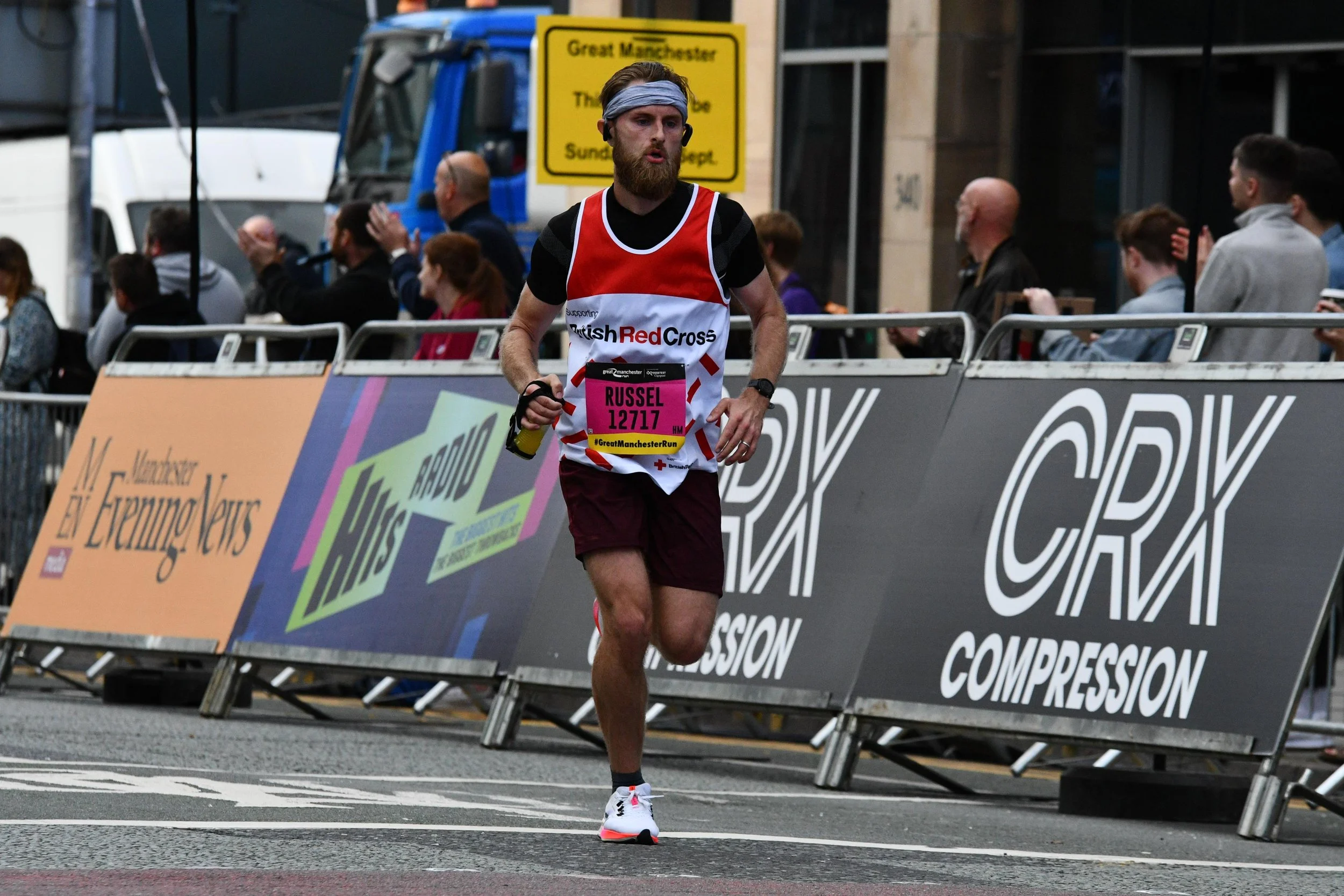
Completing my first race, the Great Manchester Run 2021
Where do these numbers come from?
Let’s start with the data. Your watch distance comes from your watch pinging satellites more than 20,000 km above you and triangulating your position. Plenty can interfere with that signal. Tall buildings and trees bounce it around, and bridges and tunnels block it completely. Round a sharp corner while the GPS has lost its connection and it can cut the corner or swing wide. Then add tens of thousands of other devices all trying to connect to the same satellites on race day, and you can see why inaccuracies creep in. Take a look at your own Strava activity and zoom in. You'll see parts where you're running through people's gardens, even over their houses.
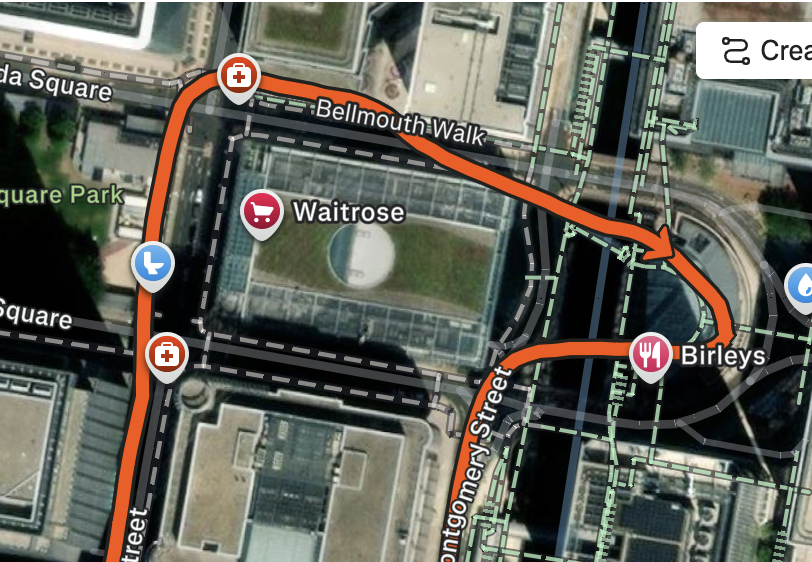
An example of GPS inaccuracies from my London Marathon 2025 activity
In training, we accept that. Our distances, paces and times will always be slightly out, but GPS is still far more convenient (and more accurate) than what the runners of the ’70s and ’80s did, which was drive their routes and measure them on the car odometer.
Chip timing is a different thing. The chip, usually on the back of your bib, is triggered when you cross the start line. It records the exact second you cross the finish line and any timing mats in between. It doesn’t care about moving time versus elapsed time, and it doesn’t care when you started or stopped your watch. On top of that, race organisers have to measure the course and have it certified by the national governing body. So from point to point, your chip time is indisputable. Every so often an event is proven to have been long or short, but that’s very rare. As participants, it isn’t our job to decide the course was out just because our GPS says so, or because we didn’t get the result we wanted.
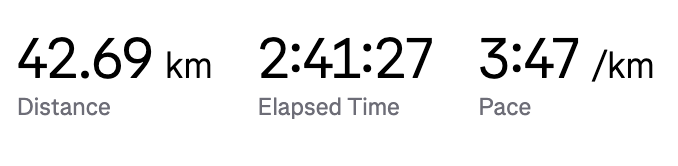
My GPS activity for London Marathon 2025: 510 m “over distance”
“But I had to weave around people”
I hear this one a lot: “I did so much weaving that I ran over the distance.” You might well have. But that doesn’t make your GPS data any more accurate, and the extra distance doesn’t make the course any longer.
Remember, when you enter an organised event, you’re not measuring how quickly you can cover the advertised distance. You’re measuring how long it takes you to complete the race. Josh Kerr broke the mile world record in July 2026, and he didn’t necessarily run the perfect line to do it. Nobody is suggesting we remeasure every step he took and adjust his time to how long it took him to cover exactly one mile. There’s a start line and a finish line for a reason. The race is getting from A to B as quickly as you can.
So what counts?
Looking back at my own journey, I’d claim my Strava times as PBs right up until the moment I raced an organised event. After that, everything was either a race or training for the next one. Whatever I ran in training counted as training times and nothing more. On race day, chip time is king, and the only thing that counts towards personal bests and qualification towards other events.
This matters most when it comes to credibility. On social media I see a lot of runfluencers, brand ambassadors, online coaches and PTs using results to build their credibility. They claim their Strava times and back them up with Strava-generated graphics. Those aren’t race results, and presenting them as if they are is false representation. They’re not just cheating themselves. They’re borrowing credibility from results they haven’t achieved, and that puts down other people’s genuine achievements.
I love running. It should be accessible to everyone, and people should be able to approach it in whatever way they like. But don’t abuse the sanctity of running by misrepresenting yourself.
